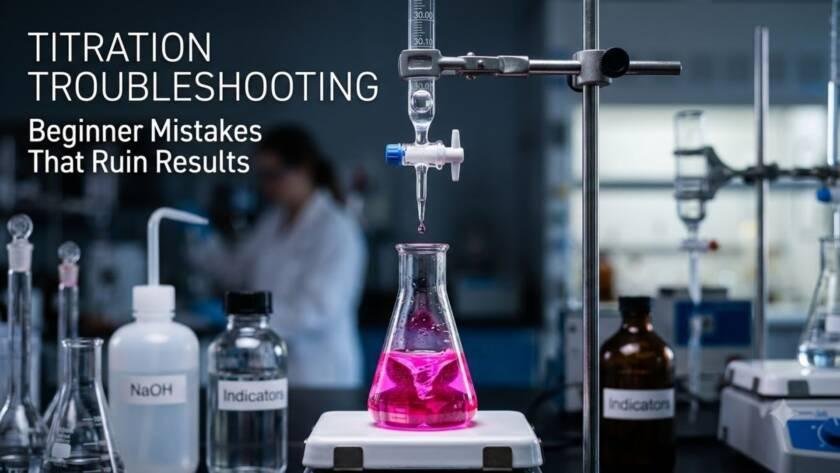
Accurate titration depends on correct glassware preparation, meniscus reading and endpoint control.Titration results can be inaccurate even when the procedure appears simple. The most common causes are unconditioned glassware, contamination, air bubbles, parallax error, incorrect burette calculations, poor endpoint control, unsuitable indicators, unstandardized titrants and inconsistent technique between trials. This guide explains how to identify…
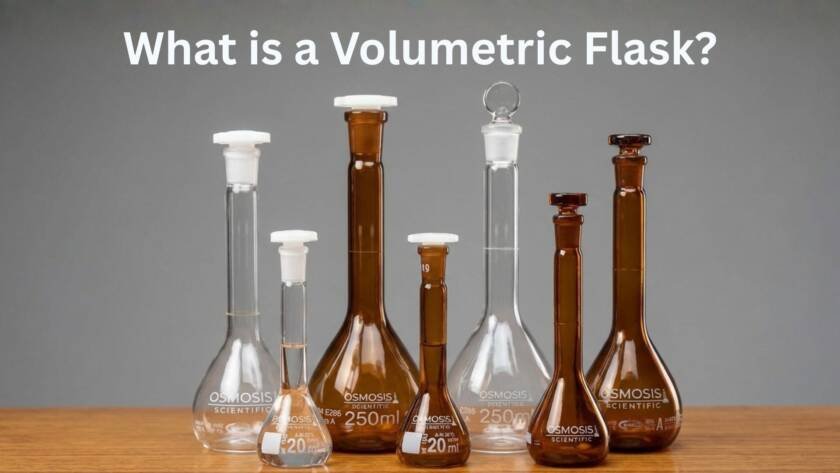
A volumetric flask is one of the most important pieces of equipment in any analytical or research lab. It looks simple — a flat-bottomed, pear-shaped glass vessel with a long, narrow neck — but that design is deliberate. Every dimension is engineered to serve one specific purpose: preparing a solution to an exact, known volume.…
A burette is one of those classic lab instruments that quietly does the hard work of precision. It looks simple—a long, narrow tube with a tap at the bottom—but it sits at the heart of accurate titrations and quantitative analysis in chemistry labs around the world. From the Osmosis Scientific point of view, this Laboratory…