
The amber reagent bottle is more than a functional piece of glassware; it represents the intersection of chemistry, physics, and a long tradition of industrial design. Whether you are procuring for a modern laboratory or identifying historical artifacts, understanding the evolution of these vessels ensures you choose safer, more reliable equipment.
1. Nomenclature: “Regent” vs. “Reagent”
Terminology often diverges between historical records and modern global trade.
- Reagent Bottles: Historically, these vessels were designed to contain chemical reagents—substances used to initiate chemical reactions.
- Regent Bottles: In contemporary export markets (particularly India and China), “Regent” has become a de facto trade descriptor for narrow-mouth, glass-stoppered bottles without volume markings.
- Media Bottles: Unlike classic reagent bottles, media bottles (GL45) typically feature screw caps and printed graduations for culture media.
Modern Utility: Quick Selection Guide
For a working laboratory, the physical form of the bottle is more critical than the nomenclature.
| Feature | Tincture Amber Reagent Bottle (Narrow Mouth) | Salt-Mouth Amber Reagent Bottle (Wide Mouth) |
|---|---|---|
| Best Used For | Storage of laboratory liquids such as acids, oils, reagents, and tinctures. The narrow neck minimizes exposure to air. | Storage of solid laboratory chemicals such as powders, crystals, salts, and granular substances with easy access. |
| Laboratory Advantage | Helps reduce evaporation, contamination, and splashing. Ideal for handling sensitive liquid reagents. | Wide mouth design allows easy filling, dispensing, and handling using spatulas or laboratory scoops. |
| Stopper Design | Comes with pennyhead or flat-head ground glass stopper for secure and airtight sealing. | Equipped with mushroom-style ground glass stopper for better grip and convenient opening. |
| Light Protection | Amber glass protects light-sensitive chemicals from UV degradation. | Amber glass prevents photochemical reactions and preserves chemical stability. |
2. The Physics of Actinic Protection
The deep brownish-orange hue of amber glass is a functional necessity driven by the laws of photochemistry.
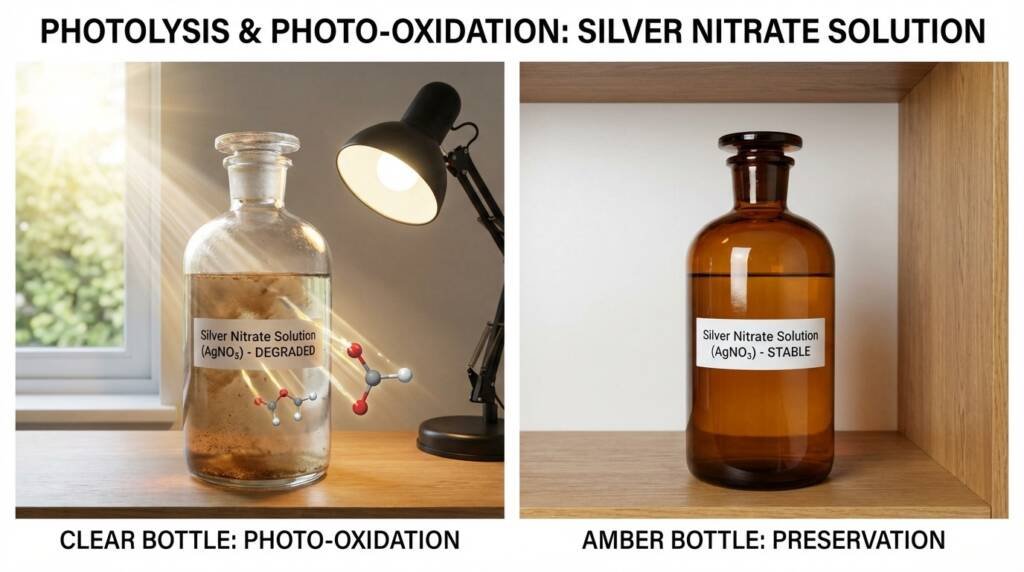
- The Actinic Mechanism: Amber glass acts as an optical filter, effectively blocking high-energy photons in the ultraviolet (UV) and blue-violet spectrum (200-450 nm).
- Preventing Degradation: Blocking these wavelengths prevents unwanted reactions such as photolysis (breaking of chemical bonds) and photo-oxidation.
- Chemical Composition: The color is achieved through a carbon-sulfur-iron chromophore mechanism during the glass-melting process.
3. From Apothecary Origins to Quality Standards
In the “Golden Age” of the apothecary (1840–1920), bottles were permanent fixtures of “shop furniture” designed to convey authority and cleanliness.
Dating Clues for Collectors
Historians and collectors use manufacturing marks to date these vessels:
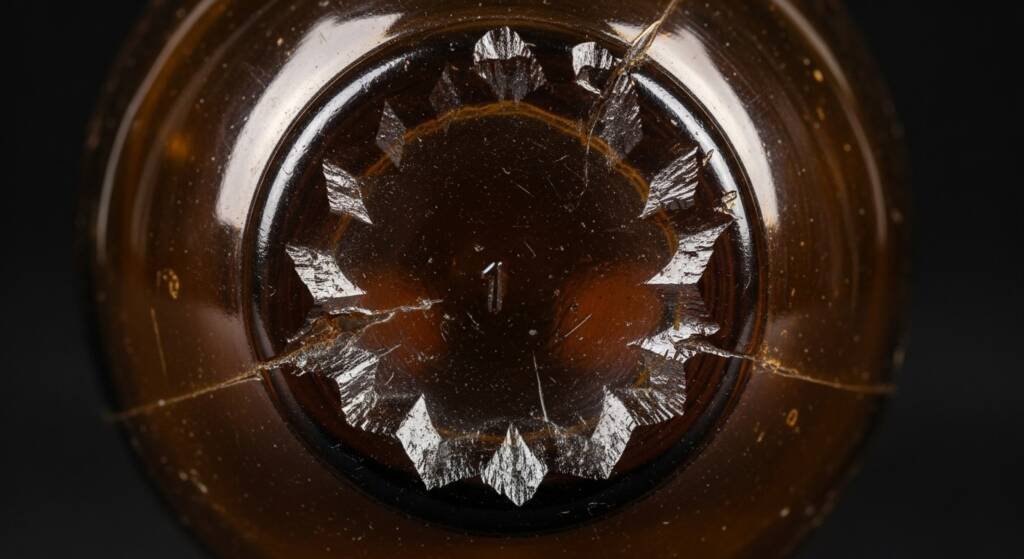
- The Pontil Scar: A rough, jagged scar on the base indicates a bottle was hand-blown (common pre-1860).
- Mold Seams: Vertical seams that stop below the lip indicate a hand-finished “tooled lip” (1880–1910), while seams running over the lip indicate machine-made production (post-1910).
- Manufacturer Marks: For example, Whitall Tatum & Co. bottles featuring an ampersand (W.T. & Co.) are definitive 19th-century markers.
Modern Manufacturing Standards
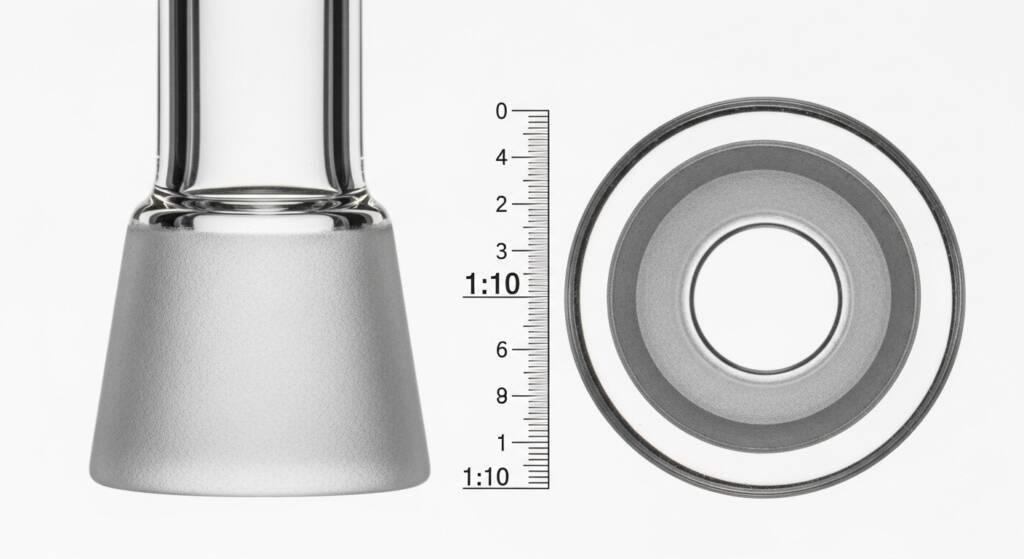
For today’s working laboratory, predictability is paramount. Modern bottles utilize Standard Taper ($) joints, which use a standardized 1:10 geometry (e.g., 24/40) to ensure that stoppers from different manufacturers are reliably interchangeable.
4. Material Performance: Borosilicate 3.3
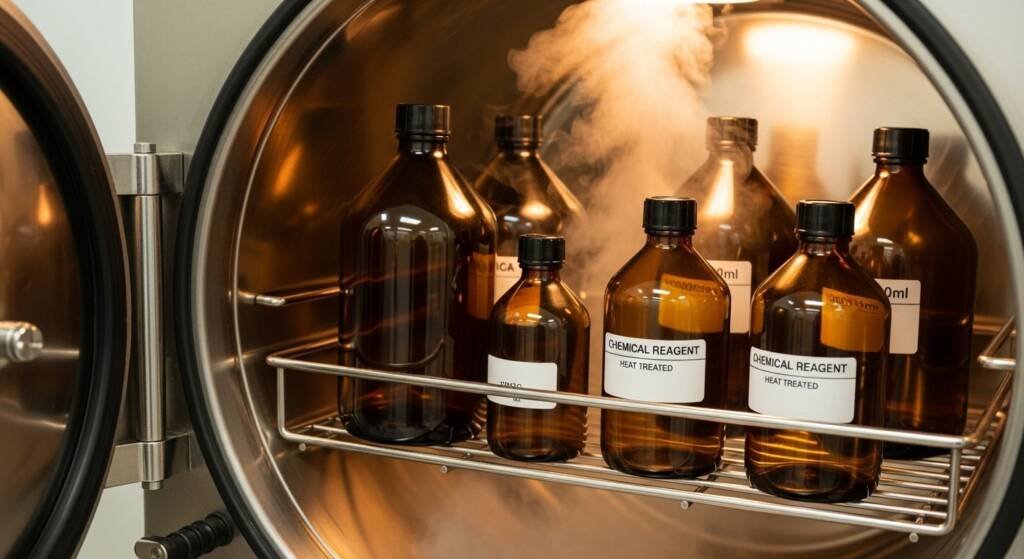
Modern amber labware has largely shifted from traditional soda-lime glass to low-expansion borosilicate glass (such as Pyrex).
- Thermal Shock Resistance: Borosilicate glass can withstand rapid heating and cooling, allowing bottles to be safely autoclaved.
- Chemical Inertness: This glass is less reactive, significantly reducing the leaching of alkali ions into the reagent (a process known as “weathering”).
5. Safety and Conservation
While antique bottles are prized display pieces, they can be hazardous in a working environment.
- Residual Hazards: “Empty” antique bottles may contain unstable residues like picric acid (a shock-sensitive explosive) or toxic heavy metals.
- “Sick Glass”: Cloudy or iridescent films on old glass indicate permanent chemical degradation (hydrolytic attack) where alkali ions have been leached out, potentially weakening the structure.
Conclusion: For reliable scientific inquiry, keep your antiques for display and trust fresh, standard-compliant amber reagent bottles for active laboratory work.