

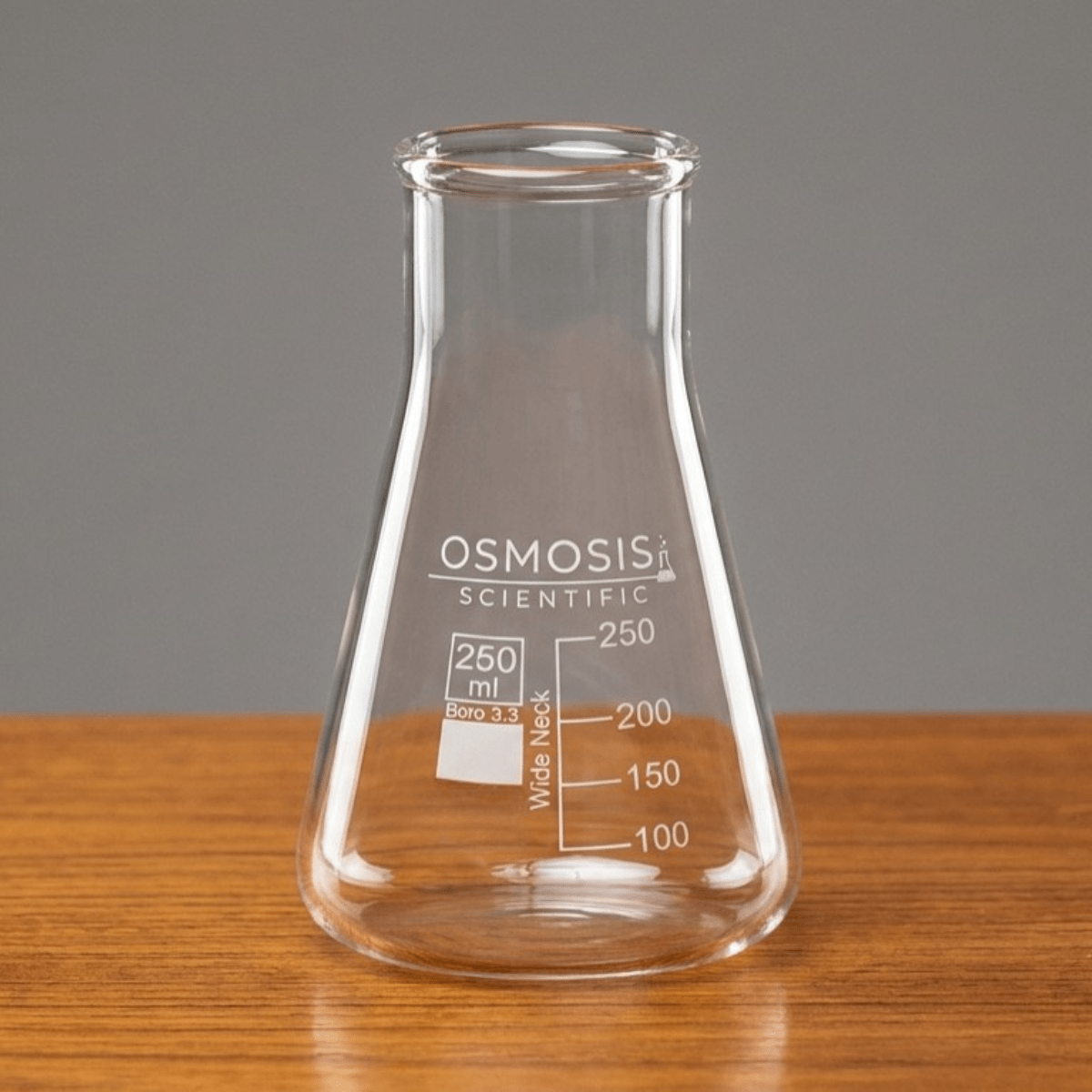



Description
| Capacity (mL) | D (mm) | D1 (mm) | H (mm) | Pack of | SKU | Enquiry |
|---|---|---|---|---|---|---|
| 25 | 42 | 31 | 70 | 10 | WNEF-0025 | Enquire Now |
| 50 | 51 | 34 | 85 | 10 | WNEF-0050 | Enquire Now |
| 100 | 64 | 34 | 105 | 10 | WNEF-0100 | Enquire Now |
| 250 | 85 | 50 | 140 | 10 | WNEF-0250 | Enquire Now |
| 500 | 105 | 50 | 175 | 10 | WNEF-0500 | Enquire Now |
| 1000 | 131 | 50 | 220 | 10 | WNEF-1000 | Enquire Now |
| 2000 | 166 | 76 | 276 | 6 | WNEF-2000 | Enquire Now |
Frequently Asked Questions (FAQs)
What is a wide neck Erlenmeyer (conical) flask used for?
Wide neck Erlenmeyer flasks are ideal for mixing, heating, and storing liquids, especially when samples are viscous, particulate, or need easy access for pipettes, spatulas, or sensors.
What material are these flasks typically made from?
Most wide neck Erlenmeyer flasks are manufactured from borosilicate 3.3 glass, offering high thermal shock resistance, chemical durability, and autoclavability for sterile work.
What typical capacities are available?
Wide neck Erlenmeyer flasks are commonly available from about 25 mL up to 2–5 L, covering small‑scale bench work through to bulk media preparation.
Can I use stoppers or caps with wide neck flasks?
Yes, they can be paired with appropriately sized rubber stoppers, screw caps, or specialized vented caps, depending on whether you are storing, autoclaving, or culturing samples.
Are wide neck flasks suitable for shaking and culture work?
They can be used on shakers for mixing and some culture applications, and specialized cell‑culture Erlenmeyer flasks with caps or baffles further improve aeration and mixing.
Reviews
There are no reviews yet.