



Description
| Capacity (ml) | Socket Size | Overall Height (mm) | Pack of | SKU |
|---|---|---|---|---|
| 50 | 19/26 | 200 | 2 | KJ-DIN-0050 |
| 100 | 19/26 | 200 | 2 | KJ-DIN-0100-19 |
| 300 | 24/29 | 295 | 2 | KJ-DIN-0300 |
| 100 | 24/29 | 200 | 2 | KJ-DIN-0100-24 |
| 500 | 24/29 | 300 | 2 | KJ-DIN-0500 |
| 800 | 24/29 | 340 | 2 | KJ-DIN-0800 |
Frequently Asked Questions (FAQs)
What is a Kjeldahl flask primarily used for?
This specialized flask is used almost exclusively for the digestion phase of the Kjeldahl method, which is the standard analytical procedure for determining the nitrogen and protein content in food, feed, environmental samples, and pharmaceuticals.
Why does the Kjeldahl flask have such a long neck?
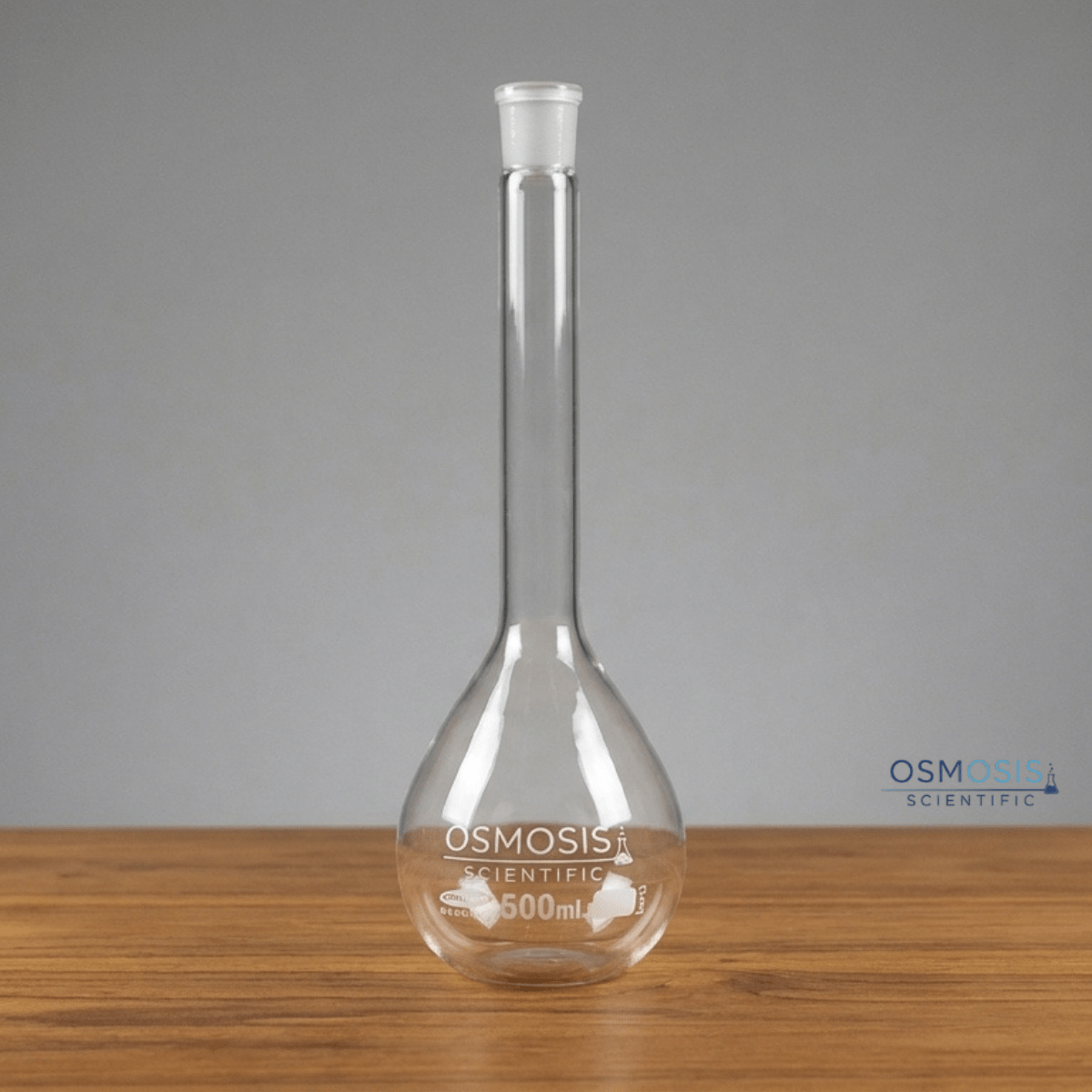
The long neck is specifically designed to act as a simple air condenser during the vigorous boiling phase of acid digestion. It helps minimize the splashback of harsh reagents (like sulfuric acid) and reduces the loss of sample vapors.
Is this flask compatible with my existing digestion block or heating mantle?
Yes, the round-bottom geometry is engineered to fit standard Kjeldahl heaters, digestion blocks, and heating mantles used in classical laboratory setups.
What quality standards does this flask meet?
The flask is produced using high-quality Borosilicate 3.3 glass for superior thermal and chemical resistance, and the overall geometry is designed to comply with applicable DIN standards for Kjeldahl digestion glassware.
How should I care for this flask given the harsh chemicals used in digestion?
Because the Kjeldahl method involves concentrated acids and high temperatures, always inspect the glass for micro-scratches or stress fractures before each use. Clean using approved laboratory protocols. Please note that Osmosis Scientific cannot be held liable for damage or breakage caused by improper handling, misuse, or improper cleaning after delivery.
Reviews
There are no reviews yet.