

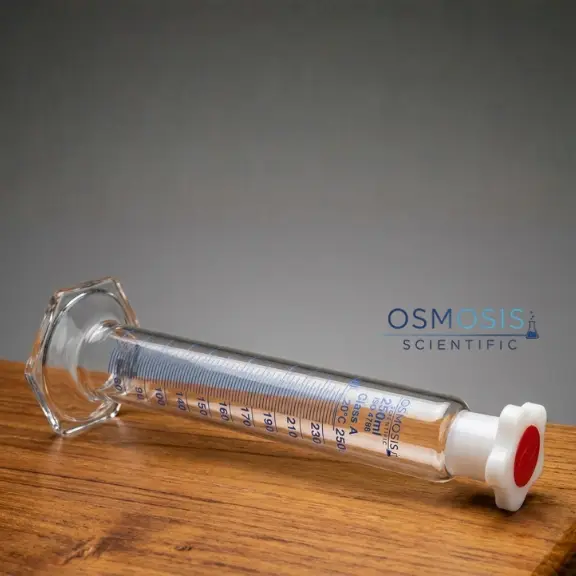




Description
| Capacity (ml) | N/S | Sub division (ml) | Tolerance (± ml) | Pack of | SKU | Enquiry |
|---|---|---|---|---|---|---|
| 5 | 10/19 | 0.1 | 0.05 | 1 | GMC-A-0005 | Enquire Now |
| 10 | 10/19 | 0.2 | 0.10 | 1 | GMC-A-0010 | Enquire Now |
| 25 | 14/23 | 0.5 | 0.25 | 1 | GMC-A-0025 | Enquire Now |
| 50 | 19/26 | 1.0 | 0.50 | 1 | GMC-A-0050 | Enquire Now |
| 100 | 24/29 | 1.0 | 0.50 | 1 | GMC-A-0100 | Enquire Now |
| 250 | 29/32 | 2.0 | 1.00 | 1 | GMC-A-0250 | Enquire Now |
| 500 | 34/35 | 5.0 | 2.50 | 1 | GMC-A-0500 | Enquire Now |
| 1000 | 45/40 | 10.0 | 5.00 | 1 | GMC-A-1000 | Enquire Now |
| 2000 | 45/40 | 20.0 | 10.00 | 1 | GMC-A-2000 | Enquire Now |
Frequently Asked Questions (FAQs)
What is a graduated mixing cylinder used for?
It’s used to measure, mix, and temporarily hold liquids when you need controlled volumes during lab prep.
What does Class A mean on this cylinder?
Class A indicates a higher accuracy grade for more precise measuring compared to general-purpose cylinders.
What ISO standard does it follow?
This type of graduated measuring cylinder is made to ISO 4788 requirements for graduated cylinders.
Why is the base hexagonal?
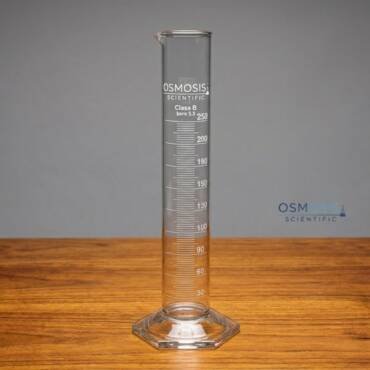
A hexagonal base improves stability and helps reduce tipping during mixing and handling.
How do I read the volume correctly?
Place it on a level surface and read the liquid level at eye height for consistent results.
Reviews
There are no reviews yet.