

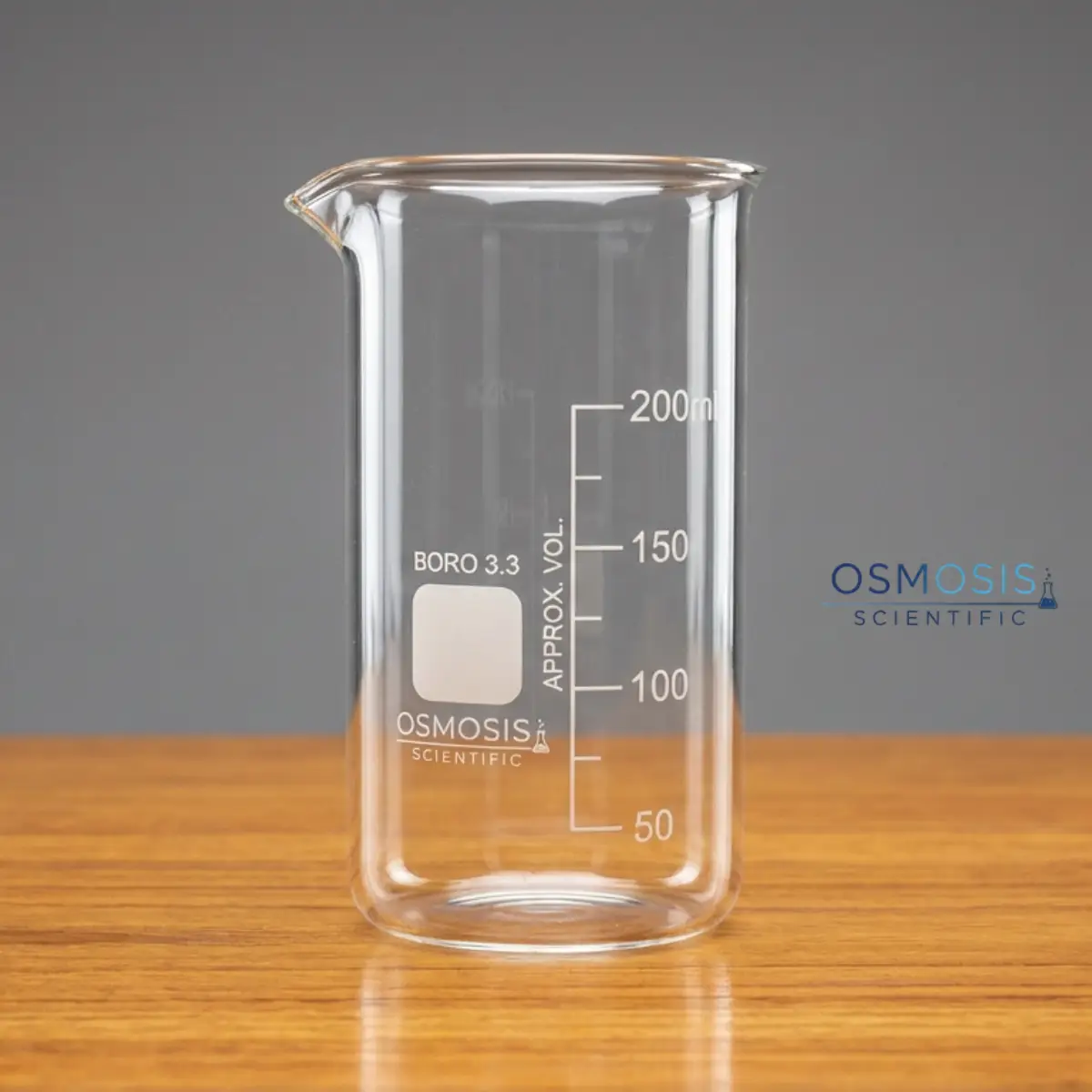


Description
| Capacity (mL) | Dia (mm) | Height (mm) | Pack of | SKU | Enquiry |
|---|---|---|---|---|---|
| 50 | 38 | 70 | 10 | BBT-0050 | Enquire Now |
| 100 | 48 | 80 | 10 | BBT-0100 | Enquire Now |
| 150 | 54 | 95 | 10 | BBT-0150 | Enquire Now |
| 250 | 60 | 120 | 10 | BBT-0250 | Enquire Now |
| 400 | 70 | 130 | 10 | BBT-0400 | Enquire Now |
| 500 | 75 | 142 | 8 | BBT-0500 | Enquire Now |
| 600 | 80 | 150 | 8 | BBT-0600 | Enquire Now |
| 1000 | 90 | 192 | 6 | BBT-1000 | Enquire Now |
Frequently Asked Questions (FAQs)
What is a Berzelius (tall form) beaker used for?
Berzelius beakers are tall, narrow-footprint beakers used for heating, mixing, and holding liquids when you need reduced evaporation and easier stirring compared with low‑form Griffin beakers.
How is a Berzelius beaker different from a Griffin beaker?
A Berzelius beaker is taller and slimmer, giving a smaller bench footprint and higher liquid column, while a Griffin beaker is shorter and wider for maximum stability and easier access with spatulas or stir bars.
What material are these beakers made from?
They are typically made from borosilicate 3.3 glass, which offers high thermal shock resistance and excellent chemical durability against most acids, bases, and organic solvents.
What standards do these beakers conform to?
Many Berzelius tall‑form beakers comply with DIN/ISO beaker standards (such as ISO 3819 or DIN 12331), ensuring consistent dimensions and compatibility with laboratory setups worldwide.
Reviews
There are no reviews yet.