

Flasks
Showing 16–17 of 17 results
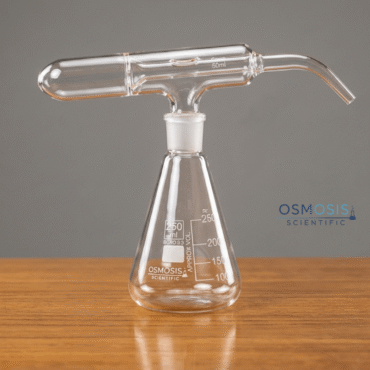
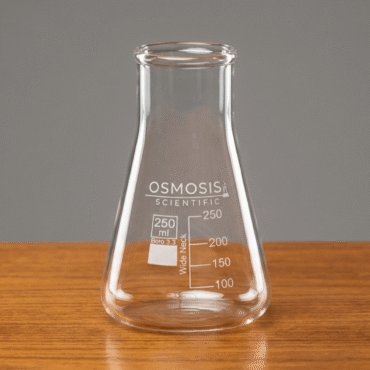
Laboratory Flasks — Precision Borosilicate Systems for Solution Prep & Reaction
Laboratory flasks are the workhorses of solution preparation and chemical reactions, combining narrow necks for controlled handling with stable bases designed for uniform heat distribution. Osmosis Scientific laboratory flasks provide a coherent borosilicate-based system for mixing, heating, storing, and accurately measuring liquids across teaching laboratories, research facilities, and quality control environments.
What is a Laboratory Flask? & Technical Specifications
A laboratory flask is a vessel with a wider base and narrower neck designed to safely hold, mix, heat, or measure liquids with improved control and reduced contamination risk. Osmosis Scientific flasks support accurate and repeatable workflows for both general mixing and high-precision volumetric preparation.
Key technical specifications include:
- Materials: Manufactured primarily from low-expansion Borosilicate 3.3 glass, offering excellent chemical resistance and thermal shock tolerance. Select plastic variants are available where impact resistance is required.
- Forms: Includes Erlenmeyer (conical), volumetric, round-bottom (boiling), flat-bottom, and filtering (Büchner) flasks to support specialized laboratory applications.
- Volumetric Accuracy: Class A and Class B volumetric flasks feature precise calibration marks at reference temperatures for exact solution preparation.
Manufacturing Quality & Key Features
Osmosis Scientific flasks are manufactured from premium Borosilicate 3.3 glass to ensure superior resistance to heat, thermal cycling, acids, bases, and laboratory solvents.
- Mechanical Strength: Controlled wall thickness and precision molding provide durability during heating, mixing, and reaction processes.
- Secure Connections: Permanent markings and optional ground-glass joints or stoppers ensure secure sealing and reliable system integration.
- Precision Measurement: Volumetric flasks feature slender necks and clear calibration lines to enable accurate meniscus reading and precise volume preparation.
Applications in Chemistry, Research, and Life Sciences
Laboratory flasks support a wide range of analytical, research, and educational workflows:
- Erlenmeyer Flasks: Ideal for mixing, titration receiving, culture preparation, and general laboratory handling with reduced splash risk.
- Volumetric Flasks: Used for preparing standard solutions, dilutions, and calibration standards requiring precise volumetric accuracy.
- Round-Bottom and Boiling Flasks: Essential for reflux reactions, distillation, and organic synthesis requiring uniform heating.
- Filtering Flasks: Designed with sidearms to support vacuum filtration procedures.
System Compatibility and Modular Integration
Osmosis Scientific flasks are designed for compatibility with standard laboratory clamps, heating mantles, condensers, and vacuum systems. Ground-glass joints follow standard sizing, enabling seamless integration into modular distillation, filtration, and analytical setups. Available volume ranges typically span from 50 mL to 2000 mL, supporting both small-scale analytical work and larger preparations.
Calibration, Traceability, and Standards Compliance
Class A and Class B volumetric flasks are manufactured to comply with recognized international standards including ISO, ASTM, and DIN requirements.
- Class A Flasks: Suitable for analytical laboratories requiring high precision and traceable measurements.
- Class B Flasks: Appropriate for routine laboratory work, education, and general solution preparation.
Note: For certified outsourced products, Osmosis Scientific acts as a supplier and distributor. Certification accuracy and traceability remain the responsibility of the original manufacturer or issuing authority.
Safe Handling, Storage, and Operational Guidelines
Proper handling extends the service life of laboratory flasks and ensures user safety.
- Thermal Use: Volumetric flasks should not be used for direct heating. Heat solutions separately and transfer after cooling.
- Inspection: Regularly inspect flasks for chips, cracks, or structural damage before use.
- Cleaning: Use compatible laboratory detergents and avoid abrasive cleaning materials.
- Plastic Flask Safety: Plastic flasks must be used within specified temperature and chemical compatibility limits.
Why Laboratories Choose Osmosis Scientific Laboratory Flasks
Osmosis Scientific laboratory flasks offer a reliable balance of material quality, precision manufacturing, and application-specific design. Our borosilicate glass systems provide dependable performance for mixing, heating, filtration, and volumetric analysis, supporting efficient workflows in research, pharmaceutical, industrial, and educational laboratories.
Frequently Asked Questions
How do I use a volumetric flask correctly?
Rinse the flask, add solute and part of the solvent, dissolve completely, then top up carefully until the meniscus touches the calibration mark at eye level, cap and invert several times to mix.
Can I heat solutions directly in any laboratory flask?
No. Only flasks designed for heating—such as Erlenmeyer, boiling or round‑bottom flasks made of borosilicate glass—should be heated, and even then they must not be sealed while on heat.
How should laboratory flasks be cleaned for accurate work?
Discard residues, wash with warm water and lab‑grade detergent, rinse thoroughly with distilled or purified water and allow to drain and dry; avoid abrasives that can scratch glass or erase markings.
Do volumetric flasks need calibration or verification?
Yes. In regulated or high‑accuracy work, volumetric flasks—especially Class A—should be periodically checked gravimetrically or against certified volumes, following your lab’s SOP and documented calibration intervals.
What safety precautions should I follow when using flasks?
Inspect for chips or cracks, avoid sudden temperature changes, never heat a capped flask, wear appropriate PPE and handle hot or vacuum‑connected flasks with suitable supports and protection.