

Reagent Bottles
Reagent Bottles — Secure Storage for Laboratory Chemicals & Media
Reagent bottles are purpose-built containers designed for the safe storage, handling, and dispensing of laboratory chemicals, buffers, and media in both liquid and solid form. At Osmosis Scientific, our reagent bottles are engineered to meet chemical compatibility and light-protection requirements, helping maintain reagent stability across analytical, research, and industrial laboratory workflows.
1. What is a Reagent Bottle? & Technical Specifications
A reagent bottle, also known as a laboratory bottle or media bottle, is a rigid container fitted with a stopper or screw cap to minimize contamination, evaporation, and spills during storage and handling.
Key technical specifications include:
- Materials: Manufactured primarily from Borosilicate 3.3 glass, offering excellent resistance to chemicals and thermal stress.
- Alternative Materials: Available in soda-lime glass and durable plastics such as HDPE and PP where lightweight handling and impact resistance are required.
- Capacity Range: Common sizes range from 30 mL to 2000 mL, supporting both analytical-scale and bulk storage applications.
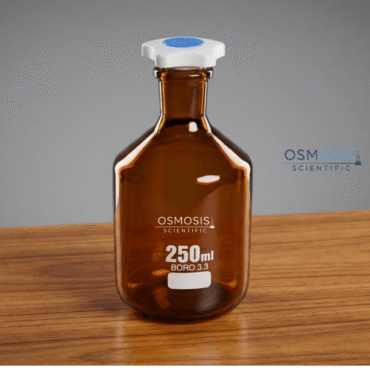
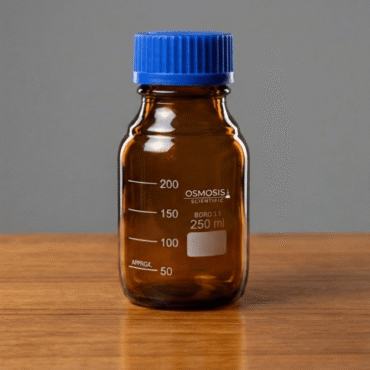
- Light Protection: Amber glass bottles protect light-sensitive chemicals from UV and actinic radiation, helping preserve chemical stability and analytical accuracy.
2. Manufacturing Quality & Design Features
Osmosis Scientific reagent bottles are manufactured using high-quality materials to ensure long-term durability and safe chemical storage.
- Borosilicate 3.3 Glass: Provides low thermal expansion and superior resistance to acids, bases, and organic solvents.
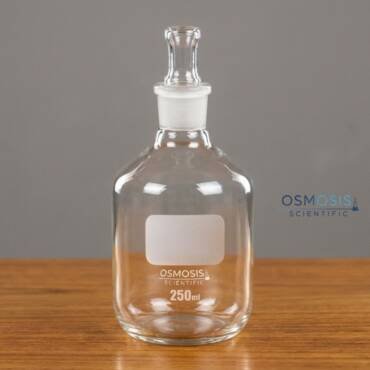
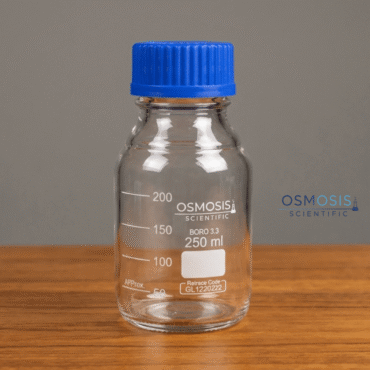
- Mouth Configurations: Available in narrow-mouth designs for controlled liquid dispensing and reduced evaporation, and wide-mouth designs for easy filling of powders, viscous liquids, and solids.
- Closure Systems: Options include screw caps, PTFE-lined caps, and ground-glass stoppers to provide secure, airtight sealing and chemical compatibility.
3. Typical Laboratory Applications
Reagent bottles are essential for chemical storage across multiple laboratory environments:
- Analytical Chemistry: Storage of acids, bases, buffers, and chemical reagents used in testing and titration.
- Life Sciences: Storage of culture media, sterile water, and biological solutions using autoclavable borosilicate glass bottles.
- Light-Sensitive Chemicals: Amber bottles protect photo-sensitive chemicals such as iodine solutions and analytical indicators.
- Sample Storage and Transport: Secure storage and safe transport of prepared laboratory solutions.
4. Quality Control & Material Assurance
Osmosis Scientific reagent bottles manufactured in-house undergo strict quality control protocols to ensure consistent material performance and durability.
Note: To provide a comprehensive product range, certain specialized or plastic reagent bottles may be sourced from verified suppliers. For these products, Osmosis Scientific acts as a supplier and distributor. Certification and material compliance remain the responsibility of the original manufacturer.
5. Handling, Safety & Maintenance Guidelines
Proper handling and maintenance ensure safe reagent storage and extended product life.
- Sterilization: Borosilicate reagent bottles are typically autoclavable at standard sterilization temperatures, subject to closure compatibility.
- Labeling: Always label bottles clearly with chemical name, concentration, hazard classification, and preparation date.
- Cleaning: Wash bottles using appropriate laboratory detergents and rinse thoroughly with deionized water.
Osmosis Scientific shall not be held liable for:
- Improper handling, misuse, or incorrect cleaning of reagent bottles.
- Material degradation or performance changes due to chemical exposure after delivery.
- Improper usage outside recommended laboratory conditions.
6. Why Laboratories Choose Osmosis Scientific Reagent Bottles
Osmosis Scientific reagent bottles offer dependable chemical storage through high-quality borosilicate glass construction, reliable sealing systems, and specialized light-protection options. Our product range supports safe, standardized storage for analytical, pharmaceutical, research, and industrial laboratory applications.
Showing all 5 results
 Buy now This product has multiple variants. The options may be chosen on the product page
- Buy now This product has multiple variants. The options may be chosen on the product page
- Buy now This product has multiple variants. The options may be chosen on the product page
- Buy now This product has multiple variants. The options may be chosen on the product page
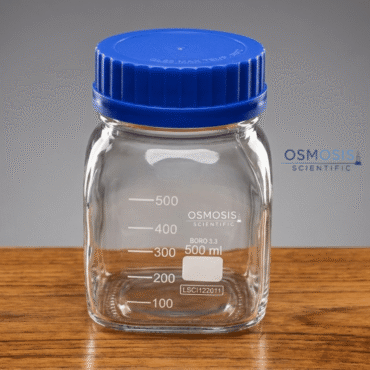
Reagent Bottles — Secure Storage for Laboratory Chemicals & Media
Reagent bottles are purpose-built containers designed for the safe storage, handling, and dispensing of laboratory chemicals, buffers, and media in both liquid and solid form. At Osmosis Scientific, our reagent bottles are engineered to meet chemical compatibility and light-protection requirements, helping maintain reagent stability across analytical, research, and industrial laboratory workflows.
1. What is a Reagent Bottle? & Technical Specifications
A reagent bottle, also known as a laboratory bottle or media bottle, is a rigid container fitted with a stopper or screw cap to minimize contamination, evaporation, and spills during storage and handling.
Key technical specifications include:
- Materials: Manufactured primarily from Borosilicate 3.3 glass, offering excellent resistance to chemicals and thermal stress.
- Alternative Materials: Available in soda-lime glass and durable plastics such as HDPE and PP where lightweight handling and impact resistance are required.
- Capacity Range: Common sizes range from 30 mL to 2000 mL, supporting both analytical-scale and bulk storage applications.
- Light Protection: Amber glass bottles protect light-sensitive chemicals from UV and actinic radiation, helping preserve chemical stability and analytical accuracy.
2. Manufacturing Quality & Design Features
Osmosis Scientific reagent bottles are manufactured using high-quality materials to ensure long-term durability and safe chemical storage.
- Borosilicate 3.3 Glass: Provides low thermal expansion and superior resistance to acids, bases, and organic solvents.
- Mouth Configurations: Available in narrow-mouth designs for controlled liquid dispensing and reduced evaporation, and wide-mouth designs for easy filling of powders, viscous liquids, and solids.
- Closure Systems: Options include screw caps, PTFE-lined caps, and ground-glass stoppers to provide secure, airtight sealing and chemical compatibility.
3. Typical Laboratory Applications
Reagent bottles are essential for chemical storage across multiple laboratory environments:
- Analytical Chemistry: Storage of acids, bases, buffers, and chemical reagents used in testing and titration.
- Life Sciences: Storage of culture media, sterile water, and biological solutions using autoclavable borosilicate glass bottles.
- Light-Sensitive Chemicals: Amber bottles protect photo-sensitive chemicals such as iodine solutions and analytical indicators.
- Sample Storage and Transport: Secure storage and safe transport of prepared laboratory solutions.
4. Quality Control & Material Assurance
Osmosis Scientific reagent bottles manufactured in-house undergo strict quality control protocols to ensure consistent material performance and durability.
Note: To provide a comprehensive product range, certain specialized or plastic reagent bottles may be sourced from verified suppliers. For these products, Osmosis Scientific acts as a supplier and distributor. Certification and material compliance remain the responsibility of the original manufacturer.
5. Handling, Safety & Maintenance Guidelines
Proper handling and maintenance ensure safe reagent storage and extended product life.
- Sterilization: Borosilicate reagent bottles are typically autoclavable at standard sterilization temperatures, subject to closure compatibility.
- Labeling: Always label bottles clearly with chemical name, concentration, hazard classification, and preparation date.
- Cleaning: Wash bottles using appropriate laboratory detergents and rinse thoroughly with deionized water.
Osmosis Scientific shall not be held liable for:
- Improper handling, misuse, or incorrect cleaning of reagent bottles.
- Material degradation or performance changes due to chemical exposure after delivery.
- Improper usage outside recommended laboratory conditions.
6. Why Laboratories Choose Osmosis Scientific Reagent Bottles
Osmosis Scientific reagent bottles offer dependable chemical storage through high-quality borosilicate glass construction, reliable sealing systems, and specialized light-protection options. Our product range supports safe, standardized storage for analytical, pharmaceutical, research, and industrial laboratory applications.
Frequently Asked Questions
What are reagent bottles used for in the laboratory?
Reagent bottles are used to store, protect, and dispense laboratory chemicals, buffers, solvents, and media while minimizing contamination, evaporation, and light or moisture damage.
How do I choose between glass and plastic reagent bottles?
Glass bottles (usually borosilicate) offer excellent chemical inertness, transparency, and long‑term storage performance. Plastic bottles (PP/HDPE) are lighter, shatter‑resistant, and ideal for routine handling and transport.
When should I use amber reagent bottles?
Amber glass or amber plastic reagent bottles are recommended for light‑sensitive reagents, as the colored walls provide protection against UV and actinic radiation in the 200–450 nm range.
How should reagent bottles be labeled and stored for safety?
Each bottle should be clearly labeled with the chemical name, concentration, hazard symbols, and date, then stored in a cool, dry, well‑ventilated area or dedicated cabinet appropriate for its hazard class.
Can reagent bottles be reused, and how should they be cleaned?
Many glass reagent bottles can be safely reused if they are thoroughly cleaned with suitable detergents, rinsed with purified water, and dried. Cleaning procedures must always consider the previous contents and your lab’s safety protocols.