

Crucible
Laboratory Crucibles — High-Temperature Analytical Vessels
A laboratory crucible is a high-temperature vessel used to heat, melt, ash, or calcine solid samples in furnaces or over direct heat sources without contaminating the material. Osmosis Scientific crucibles are selected for durability, thermal resistance, and chemical stability, making them suitable for routine laboratory workflows and high-temperature analytical applications.
What is a Crucible? Technical Specifications
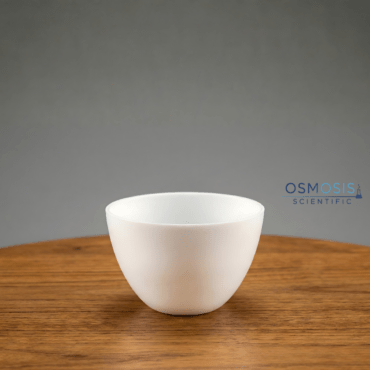
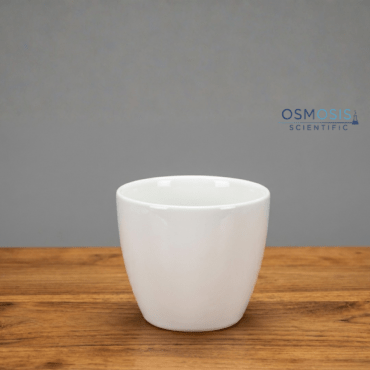
A crucible is a cup-shaped container, often supplied with a matching lid, designed to safely hold and heat materials at elevated temperatures. These vessels are essential in analytical chemistry, materials science, and industrial testing where precise thermal treatment is required.
Typical Specifications Include:
- Operating Temperature: Porcelain crucibles typically withstand temperatures up to 1,000–1,100 °C, while silica, alumina, and specialty crucibles support higher thermal limits.
- Available Forms: High-form and low-form designs, with or without lids, compatible with standard furnace racks and laboratory handling tools.
- Capacity Range: Available in small analytical sizes for gravimetric testing and larger capacities for bulk ashing and fusion applications.
Manufacturing Quality and Material Sourcing
Osmosis Scientific crucibles are selected from high-quality refractory materials to ensure reliable performance in demanding laboratory environments.
- Thermal Stability: Porcelain and ceramic crucibles offer excellent resistance to high temperatures and typical furnace conditions while maintaining chemical inertness.
- Glazed Interior Surfaces: Smooth glazed interiors minimize sample adhesion, improve cleaning efficiency, and reduce contamination risk.
- Specialty Materials: Silica and alumina crucibles are available for applications requiring enhanced thermal resistance or specialized chemical compatibility.
Note: Crucibles require specialized refractory manufacturing processes outside standard borosilicate glass production. These products are sourced from qualified third-party manufacturers. Osmosis Scientific acts as a supplier and distributor. Material composition, certification accuracy, and traceability remain the responsibility of the original manufacturer.
Applications of Laboratory Crucibles
Laboratory crucibles are essential tools for high-temperature analytical and material testing procedures.
- Gravimetric analysis and loss-on-ignition (LOI) testing.
- Ashing organic samples and fusion of ores or glass materials.
- Evaporation and concentration of chemical solutions.
- Thermal analysis and temperature-dependent mass change studies.
Compatibility with Furnaces and Laboratory Equipment
Osmosis Scientific crucibles are designed to fit standard laboratory furnaces, supports, and handling tools. Their geometry ensures stable placement within muffle furnaces and compatibility with common laboratory workflows. Crucible lids can be used to control sample atmosphere or prevent material loss during heating, while open crucibles allow free gas exchange when required.
Safe Handling, Storage, and Best Practices
Proper handling and temperature management are essential to ensure crucible longevity and safe operation.
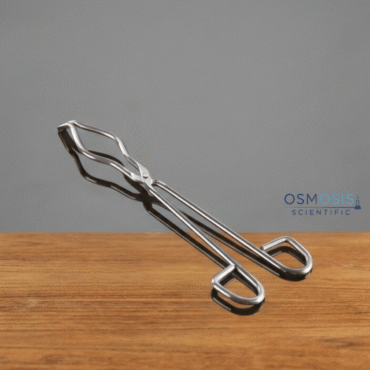
- Use appropriate crucible tongs when handling heated vessels.
- Gradually heat new crucibles to remove residual moisture and reduce cracking risk.
- Avoid sudden temperature changes to prevent thermal shock damage.
- Allow crucibles to cool on heat-resistant surfaces before cleaning or storage.
- Use compatible cleaning agents based on material type.
Osmosis Scientific shall not be held liable for:
- Damage caused by misuse, excessive temperatures, incompatible chemicals, or improper handling.
- Structural damage resulting from thermal shock, improper heating, or incorrect cleaning procedures.
Why Choose Osmosis Scientific Crucibles
Osmosis Scientific crucibles provide dependable thermal performance, material reliability, and compatibility with standard laboratory systems. Designed to support analytical laboratories, research institutions, and industrial testing environments, our crucibles help ensure consistent high-temperature performance while maintaining sample integrity and operational safety.
Showing all 7 results
Laboratory Crucibles — High-Temperature Analytical Vessels
A laboratory crucible is a high-temperature vessel used to heat, melt, ash, or calcine solid samples in furnaces or over direct heat sources without contaminating the material. Osmosis Scientific crucibles are selected for durability, thermal resistance, and chemical stability, making them suitable for routine laboratory workflows and high-temperature analytical applications.
What is a Crucible? Technical Specifications
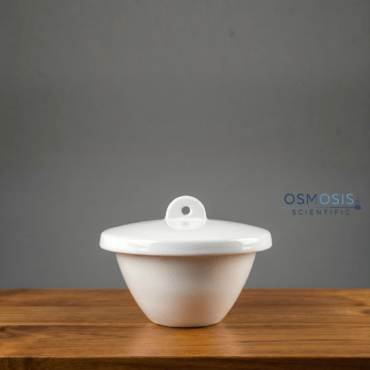
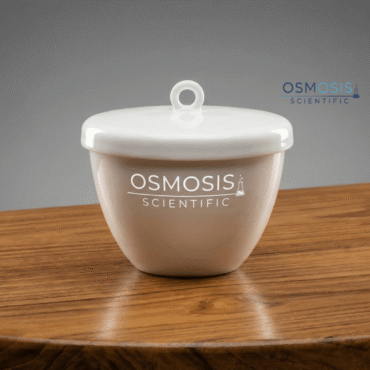
A crucible is a cup-shaped container, often supplied with a matching lid, designed to safely hold and heat materials at elevated temperatures. These vessels are essential in analytical chemistry, materials science, and industrial testing where precise thermal treatment is required.
Typical Specifications Include:
- Operating Temperature: Porcelain crucibles typically withstand temperatures up to 1,000–1,100 °C, while silica, alumina, and specialty crucibles support higher thermal limits.
- Available Forms: High-form and low-form designs, with or without lids, compatible with standard furnace racks and laboratory handling tools.
- Capacity Range: Available in small analytical sizes for gravimetric testing and larger capacities for bulk ashing and fusion applications.
Manufacturing Quality and Material Sourcing
Osmosis Scientific crucibles are selected from high-quality refractory materials to ensure reliable performance in demanding laboratory environments.
- Thermal Stability: Porcelain and ceramic crucibles offer excellent resistance to high temperatures and typical furnace conditions while maintaining chemical inertness.
- Glazed Interior Surfaces: Smooth glazed interiors minimize sample adhesion, improve cleaning efficiency, and reduce contamination risk.
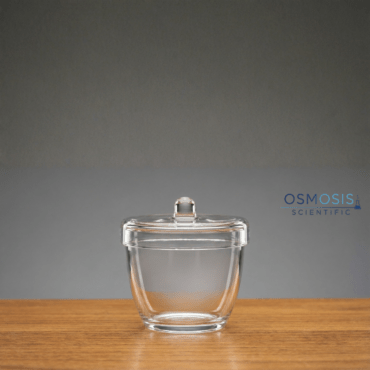
- Specialty Materials: Silica and alumina crucibles are available for applications requiring enhanced thermal resistance or specialized chemical compatibility.
Note: Crucibles require specialized refractory manufacturing processes outside standard borosilicate glass production. These products are sourced from qualified third-party manufacturers. Osmosis Scientific acts as a supplier and distributor. Material composition, certification accuracy, and traceability remain the responsibility of the original manufacturer.
Applications of Laboratory Crucibles
Laboratory crucibles are essential tools for high-temperature analytical and material testing procedures.
- Gravimetric analysis and loss-on-ignition (LOI) testing.
- Ashing organic samples and fusion of ores or glass materials.
- Evaporation and concentration of chemical solutions.
- Thermal analysis and temperature-dependent mass change studies.
Compatibility with Furnaces and Laboratory Equipment
Osmosis Scientific crucibles are designed to fit standard laboratory furnaces, supports, and handling tools. Their geometry ensures stable placement within muffle furnaces and compatibility with common laboratory workflows. Crucible lids can be used to control sample atmosphere or prevent material loss during heating, while open crucibles allow free gas exchange when required.
Safe Handling, Storage, and Best Practices
Proper handling and temperature management are essential to ensure crucible longevity and safe operation.
- Use appropriate crucible tongs when handling heated vessels.
- Gradually heat new crucibles to remove residual moisture and reduce cracking risk.
- Avoid sudden temperature changes to prevent thermal shock damage.
- Allow crucibles to cool on heat-resistant surfaces before cleaning or storage.
- Use compatible cleaning agents based on material type.
Osmosis Scientific shall not be held liable for:
- Damage caused by misuse, excessive temperatures, incompatible chemicals, or improper handling.
- Structural damage resulting from thermal shock, improper heating, or incorrect cleaning procedures.
Why Choose Osmosis Scientific Crucibles
Osmosis Scientific crucibles provide dependable thermal performance, material reliability, and compatibility with standard laboratory systems. Designed to support analytical laboratories, research institutions, and industrial testing environments, our crucibles help ensure consistent high-temperature performance while maintaining sample integrity and operational safety.
Frequently Asked Questions
What is a laboratory crucible used for?
A crucible is used to heat, ash, melt, or calcine samples at very high temperatures during procedures like loss‑on‑ignition, gravimetric analysis, and fusion.
Which crucible material should I choose?
Porcelain or ceramic suits most routine ashing and ignition; silica, alumina, or other specialty materials are chosen when you need higher temperature resistance or specific chemical compatibility.
Can I put a cold crucible directly into a hot muffle furnace?
No. Sudden temperature shocks increase the risk of cracking; crucibles should be heated gradually and tempered according to your furnace SOP.
Are Osmosis crucibles supplied with lids?
Selected crucible models come with matching lids for processes that need reduced contamination or controlled atmosphere, while others are supplied open for standard LOI and ashing work.
How should I clean and store crucibles after use?
Allow them to cool on a heat‑resistant surface, remove residues with appropriate cleaning agents, rinse and dry thoroughly before storage in a dry, stable environment.